


Poor flow control creates hidden costs. Leaks appear late. Maintenance becomes slow and expensive. Many buyers only notice these problems after installation, when fixing them is already costly.
A valve manifold is an integrated block that combines multiple valves into one unit, helping control, distribute, and isolate fluid or gas flow while reducing leak points and installation complexity.
I have worked with piping systems for almost twenty years. Every time a project replaces scattered valves with a proper manifold, system stability improves fast. That is why valve manifolds deserve serious attention.
What is a valve manifolds and where they used?
Too many single valves cause confusion on site. Pipe routing becomes messy. Each extra joint increases leak risk. Buyers then face higher labor costs and longer commissioning time.
A valve manifold is a centralized valve assembly used to manage multiple flow lines from one body in plumbing, heating, gas, and industrial systems.
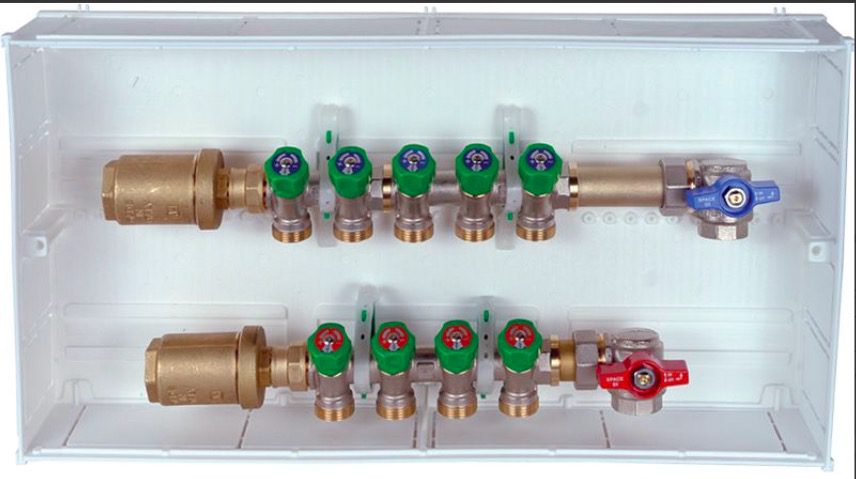
Valve Manifolds Application Plumbing Heating Gas
What a valve manifold really is
A valve manifold is usually made from brass, stainless steel, or engineered alloys. Inside one solid body, internal channels guide flow to different outlets. Each outlet is controlled by its own valve.
From my early days in a brass fittings factory, I learned one rule. One solid body is always more reliable than many connected parts. Fewer joints mean fewer failures.
Where valve manifolds are commonly used
Valve manifolds appear in many systems, not just industrial ones.
Residential systems
- PEX plumbing distribution
- Underfloor heating loops
- Hot and cold water zoning
Commercial systems
- HVAC control rooms
- Boiler and chiller installations
- Water balancing systems
Industrial systems
- Gas distribution networks
- Pneumatic control lines
- Process fluid management
Why valve manifolds are preferred
The main value is control. Operators can isolate one line without shutting down the full system. This saves time and reduces downtime.
| Advantage | Real-world effect |
|---|---|
| Fewer fittings | Lower leak risk |
| Compact design | Saves space |
| Faster installation | Lower labor cost |
| Central control | Easier maintenance |
Many Canadian buyers ask about certification. A valve manifold can be pressure tested as one unit. This makes approval simpler and more reliable.
Personal experience
When clients switch to manifolds, complaints drop quickly. Installers work faster. End users feel safer. That result repeats project after project.
What are the different types of valve manifolds?
Using the wrong manifold creates new problems. Flow may become uneven. Pressure loss may increase. Future maintenance becomes harder.
Valve manifolds come in different types, including distribution, isolation, mixing, and control manifolds, each designed for specific system needs.
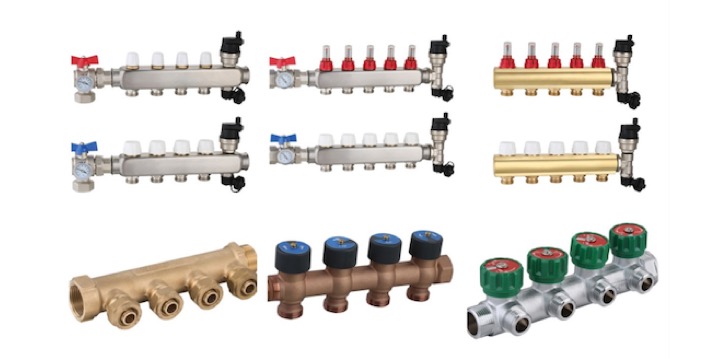
Types of Valve Manifolds
Distribution valve manifolds
Distribution manifolds split one inlet into multiple outlets. Each outlet has its own shut-off valve.
They are widely used in:
- PEX AL PEX plumbing systems1
- Radiant floor heating
- Domestic water distribution
I often recommend brass distribution manifolds2 for heating systems because they handle temperature changes well.
Isolation valve manifolds
Isolation manifolds allow parts of a system to be shut off safely. This is critical for gas and high-pressure systems.
Typical applications include:
- Gas piping systems
- Boiler connections
- Industrial fluid lines
In gas projects, isolation manifolds are not optional. They are a safety requirement.
Mixing valve manifolds
Mixing manifolds combine hot and cold water to deliver a stable outlet temperature.
Key benefits include:
- User safety
- Energy efficiency
- Comfort consistency
| Feature | Benefit |
|---|---|
| Temperature regulation | Prevents scalding |
| Integrated structure | Saves space |
| Stable output | Improves comfort |
Control and instrumentation manifolds
These manifolds work with pressure gauges and sensors. They are common in industrial environments.
They help with:
- Pressure monitoring
- System calibration
- Instrument protection
From my manufacturing background, I know machining accuracy matters here. Poor drilling leads to measurement errors.
How I choose the right manifold
I always start with the system purpose.
I ask:
- What medium flows inside?
- What pressure and temperature range?
- How often will maintenance happen?
Clear answers lead to the right manifold choice.
What is the difference between a valve and a manifold?
Many buyers mix these two concepts. That mistake often leads to redesign and extra cost later.
A valve controls flow at one point, while a manifold combines multiple valves in one body to manage and distribute flow across several lines.

Valve vs Manifolds
What a valve does
A valve is a single control device. It opens, closes, or regulates flow in one pipe.
Common examples include:
- Ball valves
- Gate valves
- Check valves
Valves are simple and essential. But they work alone.
What a manifold does
A manifold is a system controller. It manages multiple flow paths from one central body.
It works like a control panel instead of a single switch.
Practical differences in projects
| Aspect | Valve | Manifold |
|---|---|---|
| Control points | One | Multiple |
| Installation | Scattered | Centralized |
| Space use | Larger | Compact |
| Leak risk | Higher | Lower |
Cost perspective from real projects
A single valve looks cheaper at first. But manifolds reduce:
- Pipe length
- Number of fittings
- Installation time
When total system cost is calculated, manifolds often save money.
When a single valve is enough
A single valve works well when:
- The system is small
- No future expansion is planned
- Space is not limited
When manifolds make more sense
Manifolds are better when:
- Multiple zones exist
- Maintenance access is important
- Long-term reliability matters
For modern systems, manifolds usually offer the smarter solution.
Valve manifolds improve control, safety, and efficiency. From my experience, choosing the right manifold early prevents problems and protects long-term system value.
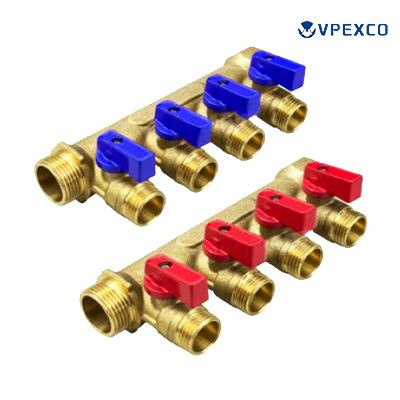
For more hot sales valve manifolds, welcome to
CONTACT VPEXCO