A poor filter valve can cause leakage, pressure loss, and equipment damage. Choosing the right Chinese manufacturer can reduce these risks before they reach the project.
The top brass filter valve manufacturers in China combine reliable brass materials, accurate machining, stable filtration performance, quality testing, competitive pricing, and OEM support. In 2026, buyers should compare suppliers by product quality, certification, production capability, and export experience, not only by price.
China is one of the important sourcing markets for brass valves, strainers, and plumbing components. Many manufacturers can provide brass Y-strainers, filter valves, and customized products. However, not every factory has the same production capability or quality-control system.
For buyers, the real challenge is not finding a supplier. The challenge is finding a supplier that can provide stable quality, suitable certification, competitive pricing, and reliable delivery.
What's the Function of Brass Filter Valve?
Pipeline debris can enter a plumbing or heating system during installation and operation. If the debris reaches pumps, meters, valves, or other sensitive components, it can cause blockage and performance problems.
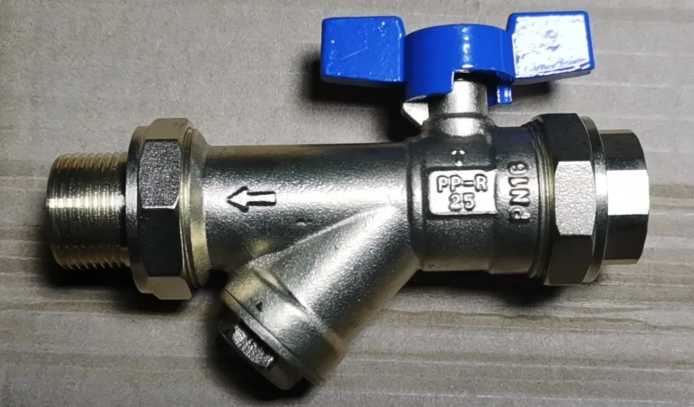
A brass filter valve removes solid particles from a fluid while controlling or isolating the flow. It helps protect downstream equipment from dirt, rust, sand, scale, and other pipeline debris.
Brass Filter Valve Function
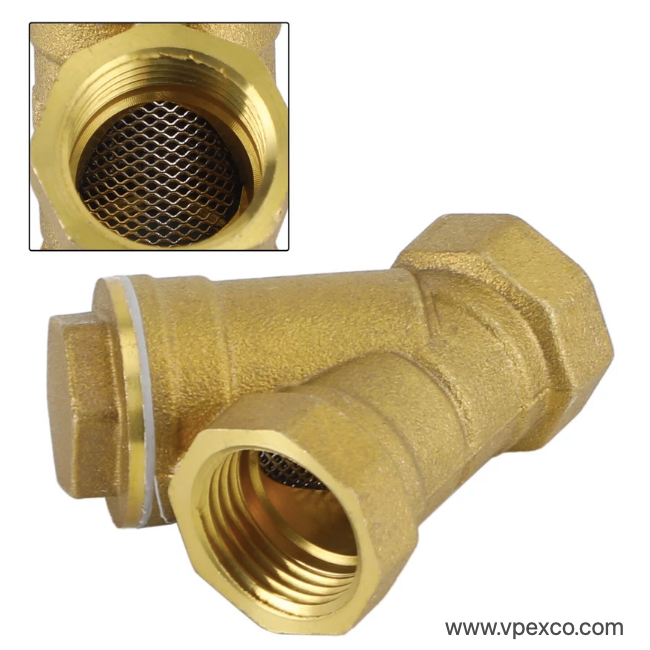
A brass filter valve normally contains a brass valve body and a filter screen. Water or another suitable fluid enters the valve and passes through the screen. The screen catches solid particles while the filtered fluid continues through the pipeline.
What Problems Can a Brass Filter Valve Prevent?
A pipeline can contain different types of unwanted particles. Some particles come from pipe installation. Others come from corrosion or normal system operation.
Common contaminants include:
- Sand
- Rust
- Metal particles
- Pipe scale
- Dirt
- Installation debris
These particles can affect downstream components.
A pump can lose efficiency when debris enters the system. A control valve can become blocked. A water meter can also experience problems when the internal passage becomes contaminated.
A filter valve provides a simple way to reduce these risks.
Brass Filter Valve vs. Separate Filter and Valve
One advantage of a filter valve is the combination of two functions in one component.
| Function | Brass Filter Valve | Separate Filter + Valve |
|---|---|---|
| Particle filtration | Yes | Yes |
| Flow isolation | Often available | Yes |
| Number of components | Lower | Higher |
| Installation space | Can be reduced | Usually larger |
| Maintenance | Depends on design | Depends on both components |
| Potential connection points | Fewer | More |
A combined design can simplify some pipeline layouts. It can also reduce the number of separate fittings and connection points.
However, the exact product structure should always be checked. Some products called “filter valves” mainly function as strainers, while others combine a shut-off valve with a filtration chamber.
Where Are Brass Filter Valves Used?
Brass filter valves are commonly used in:
- Residential plumbing
- Commercial water systems
- Heating systems
- HVAC systems
- Water supply lines
- Pump protection
- Meter protection
- Irrigation systems
- General fluid-control applications
The correct product depends on the fluid, pressure, temperature, flow rate, and filtration requirement.
A standard brass filter valve should also not be confused with a complete water purification system. A normal filter screen mainly removes solid particles. It does not automatically remove bacteria, dissolved chemicals, or other microscopic contaminants.
Brass Filter Valve China Top 5 Manufacturers
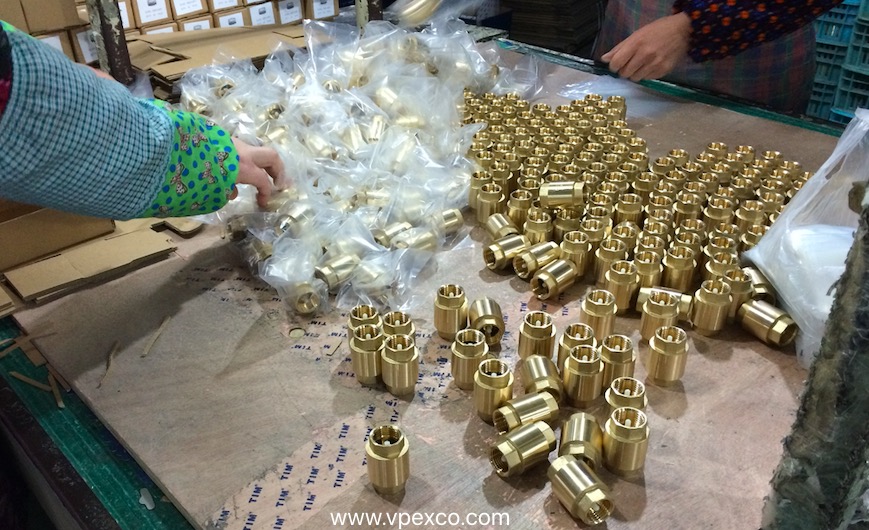
China has many brass valve manufacturers, but not every factory has the same experience with filter valves. Product range, machining capability, quality control, certification, and export service should all be considered.
Five manufacturers worth researching for brass filter valves, brass strainers, and related valve products are VPEXCO, D&R Metal Industry, IFAN, Ningbo Yunhua Valve, and CMEC AQUA Valve Manufacturing.
Brass Filter Valve China Manufacturers
The companies below should be viewed as a practical sourcing shortlist rather than a fixed ranking. Product availability and technical specifications can change, so buyers should confirm the latest product information directly with each manufacturer.
1. VPEXCO
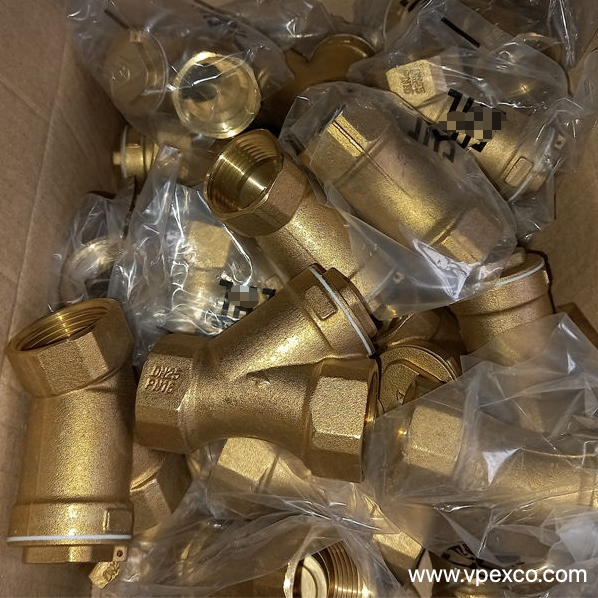
VPEXCO is a China-based manufacturer and supplier focused on brass fittings, valves, PEX, PEX-AL-PEX, and complete piping solutions for plumbing, heating, and gas systems. The company states that it has more than 20 years of manufacturing experience and provides OEM and ODM services.
VPEXCO can be a useful option for buyers who need more than a single valve product. Its product range includes brass valves, PEX fittings, manifolds, PEX pipes, and related piping products.
This broader product range can be useful for distributors that want to consolidate several plumbing products with one supplier.
For a brass filter valve project, buyers should confirm the exact filter valve model, material, mesh specification, pressure rating, and certification before placing an order.
2. D&R Metal Industry
D&R Metal Industry has a strong focus on brass valves, fittings, and brass Y-strainers. Its official product information describes more than 18 years of brass Y-strainer manufacturing experience and customized production based on customer samples or specifications.
The company describes a manufacturing process that includes material testing, forging, sand blasting, CNC machining, plating, assembly, and pressure testing.
This production process is important because the performance of a brass filter valve depends on more than the raw material. Thread accuracy, machining quality, filter assembly, and sealing performance can all affect the finished product.
D&R may therefore be worth considering when the main requirement is a brass Y-strainer or customized brass filtration product.
3. IFAN
IFAN is a Chinese piping-system manufacturer with a broad product range covering plumbing, heating, pipe fittings, valves, and related piping products.
For buyers considering IFAN, the key advantage is the broader piping-system product range. This can be useful when brass valves need to be sourced together with pipe fittings or other plumbing components.
However, buyers should confirm the current brass filter valve range, technical specifications, and applicable certifications directly with the company before making a purchasing decision.
4. Ningbo Yunhua Valve
Ningbo Yunhua Valve Co., Ltd. focuses on gas fluid valves, water supply valves, and hardware accessories. Its official website lists a brass Y-type strainer as product YH-501.
The company also describes a 20,000-square-meter production base with CNC machining, automated assembly, and testing equipment. It states that its production capacity reaches 2 million sets of valves and 10 million sets of hardware accessories annually.
This production infrastructure can be relevant for buyers who need stable volume production.
For projects involving brass Y-type strainers, buyers should compare mesh options, connection standards, pressure ratings, brass grades, and testing requirements before selecting the final model.
5. CMEC AQUA Valve Manufacturing
CMEC AQUA Valve Manufacturing Co., Ltd. is a Chinese manufacturer specializing in brass and bronze valves and water-plumbing products. The company states that it was established in 1987 and offers brass and bronze products for international markets.
Its published material options include several brass and bronze grades, as well as no-lead brass. The company also states that it has ISO 9001 and CE certification and provides OEM and design services.
CMEC has a broad valve portfolio that includes ball valves, check valves, angle valves, gate valves, globe valves, stop valves, and other valve products.
For buyers looking for a broad valve supplier rather than a specialist focused only on strainers, CMEC can be included in the sourcing comparison.
Quick Comparison of the Five Manufacturers
| Manufacturer | Main Product Strength | Brass Strainer Focus | OEM/ODM | Best Fit |
|---|---|---|---|---|
| VPEXCO | Brass fittings, Brass valves, PEX systems | Strong | Yes | Plumbing and heating distributors |
| D&R Metal Industry | Brass valves and Y-strainers | Strong | Yes | Customized brass strainer buyers |
| IFAN | Complete piping systems | Confirm current range | Yes | Plumbing system sourcing |
| Ningbo Yunhua Valve | Water and gas valves | Y-type strainer available | Yes | Valve and hardware buyers |
| CMEC AQUA | Brass and bronze valves | Confirm specific filter model | Yes | Large valve product sourcing |
The “best” manufacturer depends on the buyer's requirements.
A distributor looking for PEX-AL-PEX pipes, brass fittings, and valves may prefer a one-stop supplier. A buyer looking specifically for customized Y-strainers may prefer a manufacturer with a stronger strainer focus.
Price should therefore be only one part of the comparison.
Is Brass Filter Valve Better than Plastic Filter Valve?
Plastic filter valves can offer lower weight and lower material cost. Brass filter valves can provide stronger mechanical performance and are widely used in demanding plumbing and heating applications.
Brass filter valves are generally a better choice when mechanical strength, durability, temperature resistance, and long-term reliability are important. Plastic filter valves can be a better choice when low weight, low cost, and corrosion resistance are the main priorities.
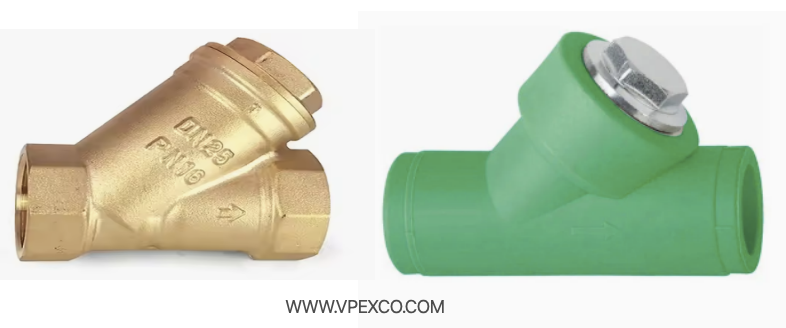
Brass Filter Valve VS Plastic Filter Valve
The correct choice depends on the application. Brass should not automatically be considered better for every system.
Why Is Brass Popular for Filter Valves?
Brass offers a useful balance between strength, machinability, durability, and cost.
A filter valve can experience internal pressure and mechanical stress during installation and maintenance. Brass provides a strong body for many plumbing applications.
Brass also has good machining characteristics. This allows manufacturers to produce accurate threads and internal passages.
For professional plumbing and heating products, these characteristics make brass a common material choice.
What Are the Advantages of Plastic?
Plastic filter valves also have important advantages.
Plastic products can offer:
- Lower weight
- Lower material cost
- Good corrosion resistance
- Easy transportation
- Easy handling
- Suitable performance for selected applications
Engineering plastics can perform well when the material is correctly selected.
However, the exact plastic type matters. Different plastics have different pressure and temperature limits.
Brass vs. Plastic Filter Valve
| Factor | Brass Filter Valve | Plastic Filter Valve |
|---|---|---|
| Mechanical strength | High | Depends on plastic type |
| Weight | Higher | Lower |
| Temperature resistance | Generally strong | Depends on material |
| Thread strength | Strong | Depends on design |
| Corrosion resistance | Good | Very good for many fluids |
| Cost | Usually higher | Usually lower |
| Installation | Robust | Lightweight |
| Heavy-duty applications | Often preferred | Requires careful selection |
| Long-term plumbing use | Excellent in many applications | Good in suitable applications |
For commercial plumbing, heating, and higher-demand systems, brass can provide a stronger and more durable solution.
For lightweight and cost-sensitive applications, plastic may provide enough performance at a lower cost.
The final choice should always be based on pressure, temperature, fluid, installation conditions, and expected service life.
How to Choose the Material of Filter Valve?
Material selection affects pressure resistance, temperature performance, durability, corrosion resistance, certification, and product cost.
The right filter valve material should be selected according to the fluid, pressure, temperature, application, required service life, certification, and target market. Brass is a strong general choice for plumbing and heating, while engineering plastics can be suitable for lighter and lower-cost applications.
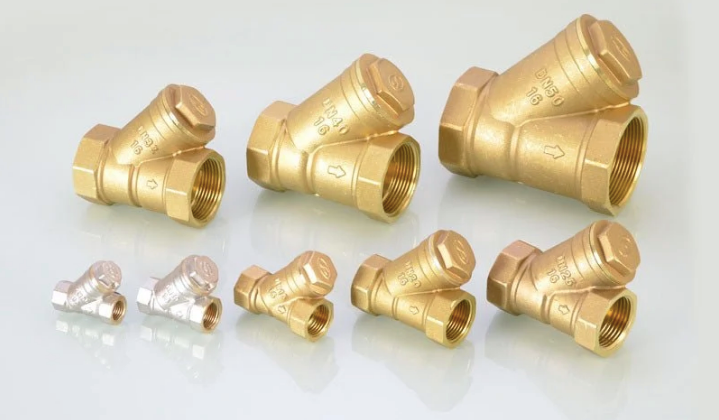
Brass Filter Valve Material
Choosing the material only according to unit price can create problems later. The material needs to match the actual working conditions.
1. Consider the Fluid
The first question should be about the medium.
Is the valve used for:
- Drinking water?
- Cold water?
- Hot water?
- Heating water?
- Oil?
- Gas?
- Non-corrosive fluid?
Different fluids can require different materials and sealing systems.
A material suitable for water does not automatically become suitable for gas or aggressive chemicals.
2. Consider Working Pressure
Pressure affects the required body strength.
Higher-pressure systems require a valve body and filter structure that can safely withstand the operating pressure.
The product should have a clear pressure rating. Buyers should also check whether the rating applies to the actual temperature and medium.
3. Consider Working Temperature
Temperature can affect both the valve body and seals.
A valve used in a heating system may face much higher temperatures than a cold-water plumbing valve.
The material should therefore be selected according to the maximum and minimum working temperatures.
4. Consider the Brass Grade
“Brass” does not mean one single material.
Different brass grades have different chemical compositions and mechanical properties. Buyers should request the exact material specification when the application has strict requirements.
For potable-water products, lead content and local regulations may also be important.
5. Consider the Filter Screen Material
The valve body is not the only component that matters.
The filter screen can be made from brass, stainless steel, or other suitable materials.
Stainless steel screens can provide good corrosion resistance and mechanical strength. Brass screens can also be suitable for many plumbing applications.
The mesh size should also match the filtration requirement.
6. Consider Certification
Certification should be checked according to the destination market.
North American, European, and other markets can have different requirements for plumbing products.
Buyers should request the actual certificates instead of relying only on statements such as “CE certified” or “international standard.”
The certificate should match the actual manufacturer, product, model, and applicable standard.
7. Consider Total Purchasing Cost
Material cost is only one part of the total cost.
A cheaper plastic valve may have a lower purchase price, but a brass valve may offer better durability for a demanding application.
The total cost should include:
| Cost | What to Check |
|---|---|
| Product price | Unit quotation |
| Transportation | Weight and shipping cost |
| Installation | Connection and labor requirements |
| Maintenance | Cleaning and replacement |
| Failure risk | Leakage and product damage |
| Certification | Testing and compliance costs |
| Service life | Expected operating period |
A professional purchasing decision should compare total value rather than only unit price.
What Is the Best Material for a Filter Valve?
For many plumbing and heating applications, forged brass is a practical choice because it provides a balance between strength, durability, machinability, and cost1.
A stainless-steel filter screen can also be considered when higher corrosion resistance or stronger filtration components are required2.
Plastic can be suitable for applications where weight and cost are more important and the operating conditions remain within the plastic material's limits.
The final selection should always be based on the actual working conditions.
For buyers sourcing brass filter valves from China, the most useful next step is to compare suppliers using a fixed checklist covering brass grade, pressure rating, mesh size, certification, MOQ, lead time, OEM capability, quality inspection, and after-sales service.
The best brass filter valve manufacturer depends on product quality, certification, customization, price, lead time, and the buyer's specific application.
-
"The Complete Guide to Brass Fittings: Forged, Lead-Free, and Everything ...", https://www.industrialpartsfittings.com/blog/the-complete-guide-to-brass-fittings-forged-lead-free-and-everything-in-between. This source explains the material properties of forged brass, including its balance of strength, durability, machinability, and cost, in the context of plumbing and heating applications. Evidence role: mechanism; source type: encyclopedia. Supports: Forged brass is a practical choice for plumbing and heating applications due to its balance of strength, durability, machinability, and cost.. ↩
-
"Stainless Steel Mesh Screens for Industrial Filtration | CA Wire", https://cawire.com/the-role-of-stainless-steel-mesh-screens-in-industrial-filtration/. This source discusses the advantages of stainless-steel filter screens, particularly their corrosion resistance and strength, in filtration applications. Evidence role: mechanism; source type: education. Supports: Stainless-steel filter screens are suitable for applications requiring higher corrosion resistance or stronger filtration components.. ↩